1. Introduction
Proper bolt tightening is a critical process in mechanical and industrial applications, ensuring structural integrity, safety, and longevity. Improper sequences can lead to uneven pressure distribution, joint leaks, flange warping, or even catastrophic failures . This blog explores the principles, techniques, and best practices for tightening bolts effectively.

2. What is a Bolt Tightening Sequence?
A bolt tightening sequence is a systematic method of securing bolts in a specific order to distribute load evenly across a joint. Key principles include:
- Avoiding straight-line or random patterns : Random tightening risks localized stress concentrations.
- Criss-cross or star patterns : These ensure balanced pressure, especially for flanges and circular joints .
- Sequential numbering : Bolts are numbered clockwise (e.g., 1, 2, 3…) for clarity during multi-pass tightening .
Example : For an 8-bolt flange, a criss-cross pattern pairs opposite bolts (e.g., 1–5, 3–7) to maintain symmetry .

3. Why Does the Sequence Matter?
- Uniform clamping force : Prevents gasket damage and ensures leak-proof seals in piping systems .
- Reduces elastic interaction : Bolts tightened adjacently can deform under stress, altering load distribution .
- Safety and reliability : Proper sequences minimize risks of joint failure in critical applications like automotive or aerospace engineering.
4. Step-by-Step Tightening Procedures
Multi-Pass Method
The most reliable approach involves three stages:
- First Pass (30% Torque) :
- Tighten bolts in a criss-cross pattern (e.g., 1–5–3–7–2–6–4–8 for 8-bolt flanges) .
- Ensures even initial contact between components.
- Second Pass (60% Torque) :
- Repeat the same sequence to further align the joint.
- Final Pass (100% Torque) :
- Tighten all bolts to full torque in a single clockwise pass .
Criss-Cross Pattern
- For 4/8-bolt configurations : Tighten opposite pairs alternately (e.g., top-left → bottom-right) to balance forces 10.
- Tip : Visualize a star or diamond shape when selecting pairs.
Star Pattern
- Ideal for circular flanges with 12+ bolts.
- Bolts are tightened in a star-like sequence (e.g., 1–7–4–10–2…) to distribute force evenly .
5. Advanced Considerations
- Torque Optimization : Some standards recommend over-torquing (110% of target) in intermediate steps to compensate for relaxation .
- Dynamic Sequences : Research explores adaptive methods based on bolt group geometry and material properties .
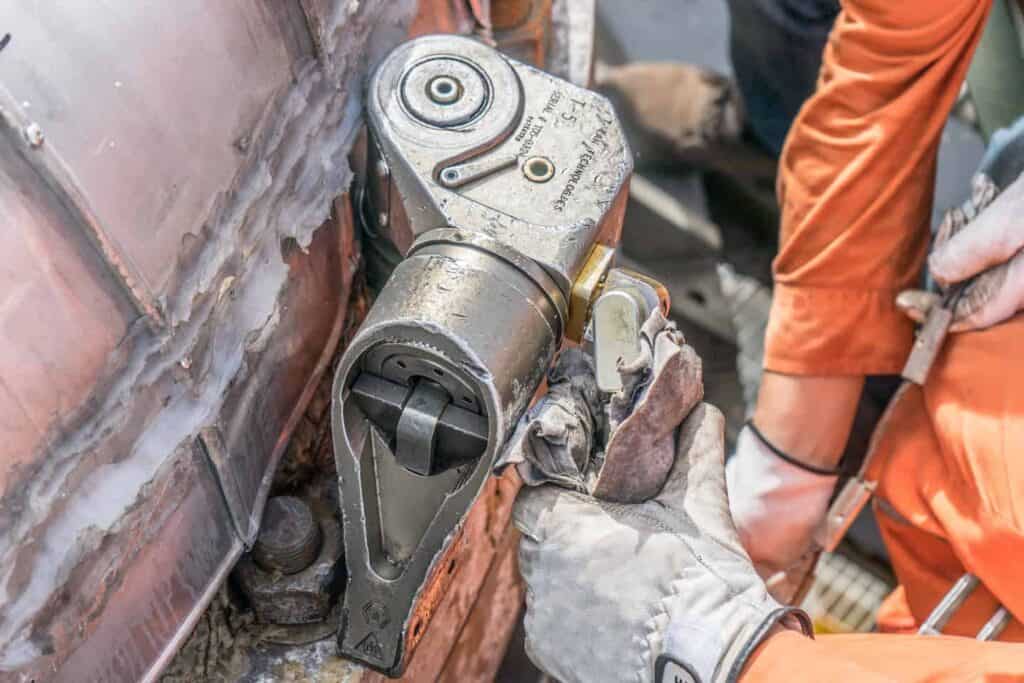
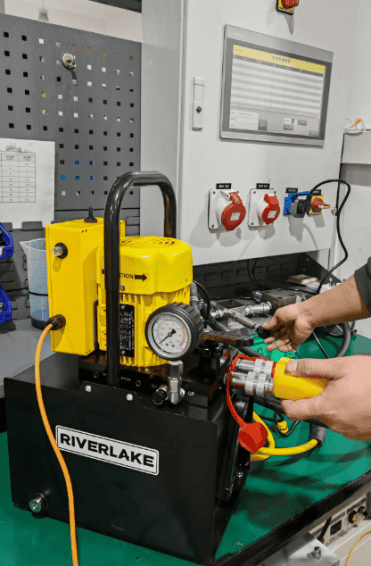
- Tools : Use calibrated torque wrenches, hydraulic tensioners, or smart systems for precision .
6. Common Mistakes to Avoid

- Single-pass tightening : Applying full torque in one step risks uneven load distribution .
- Sequential tightening : Tightening bolts in numerical order (1→2→3…) creates stress gradients .
- Ignoring re-torque checks : Joints may relax after initial tightening; re-check torque after 24 hours .
7. Case Studies & Industry Examples
Pipeline Flange Maintenance
A 3-stage torque process reduced leakage rates by 70% in an industrial gas pipeline. By following a criss-cross sequence, operators avoided flange distortion .
Automotive Engine Assembly
Engine manufacturers use star patterns for cylinder head bolts to prevent warping, ensuring optimal combustion chamber sealing .
8. Conclusion
Adhering to proper bolt tightening sequences is non-negotiable for safety and performance. Whether using criss-cross, star patterns, or multi-pass methods, the goal remains the same: even load distribution. Always consult manufacturer guidelines or industry standards like ASME or ANSI for critical applications .